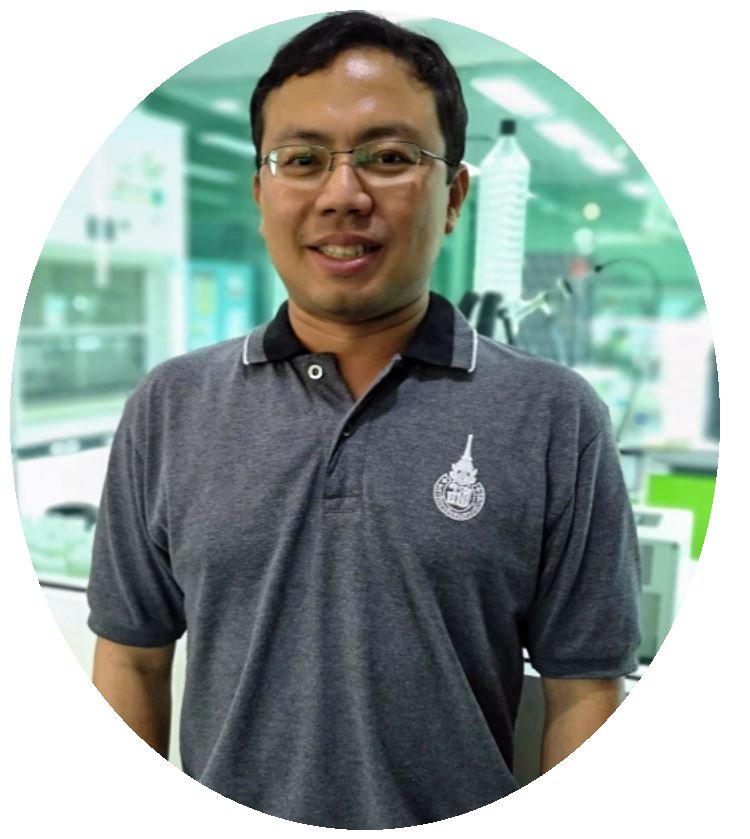
Assoc. Prof. Dr. Surapong Chatpun
Dear Colleagues,
Welcome to the 14th Biomedical Engineering International Conference (BMEiCON2022). The BMEiCON is the main annual international conference organized by the Thai Biomedical Engineering Association (ThaiBME) which had been held in famous cities around Asia including Chiang Mai, Sapporo, Luang Prabang, Pattaya, Fukuoka, Krabi, Ubon Ratchathani, Kyoto, Phuket, and Bangkok since its inaugural event. This year, the BMEiCON venue is back to the south of Thailand in Songkhla, an undeniably historic town endowed with ancient ruins, arts, and places of cultural importance
The mission of BMEiCON is to advance the application of engineering sciences and technology to medicine and biology, and to promote the profession for the benefit of its members and humanity by disseminating knowledge, setting standards, fostering professional development and recognizing excellence. Conferences are important activities and provide a valuable platform for the exchanging of ideas, reporting the latest results in R&D efforts, and debating up-to-date topics.
The organizing committee of BMEiCON2022 has developed an extensive and fascinating program. The program is originally enriched by keynote speeches to be delivered by a list of renowned and well-respected researchers including Prof. Lim Chwee Teck , Assoc. Prof. Dr. Arao Funase, Assoc. Prof. Dr. Anak Khantachawana and Asst.Prof. Dr. Pasarat Khongkow. Also, the technical program is comprised of contributed papers from around the world covering a wide spectrum of research topics in biomedical engineering.
All papers submitted to BMEiCON2022 were peer-reviewed by technical program committee and reviewers. In addition, BMEiCON2022 is accomplished by the dedication and the assistance of the organizing committee and all staffs. I would like to express my gratitude to all committee members and staffs for their hard works. I am also grateful for the contributions provided by our keynote speakers, the authors, and participants who join to advance research in biomedical engineering and its related fields. I hope that you will find BMEiCON2022 a great forum for exchanging your ideas and research, and also building up your research network.
Wish you all a great success at BMEiCON2022 and a pleasant stay in Songhla.
Best regards,
Surapong Chatpun
BMEiCON2022 General Chair
Prince of Sonkhla University, Thailand
Chuchart Pintavirooj
BMEiCON2022 General Co-chair
King Mongkut's Institute of Technology, Ladkrabang
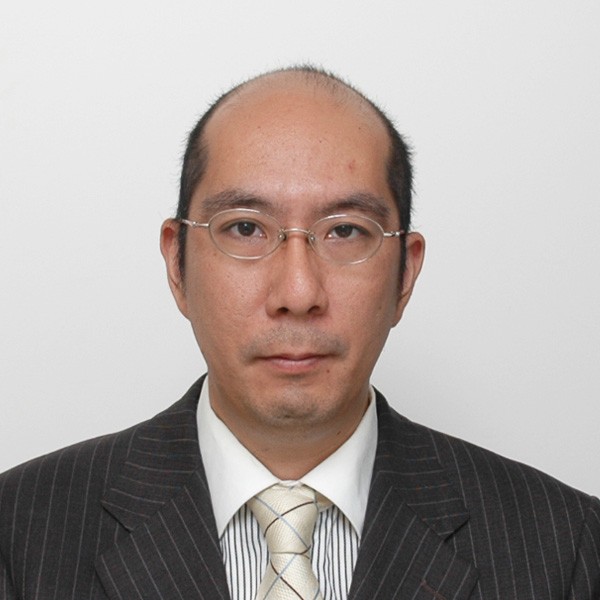
Assoc. Prof. Dr. Arao Funase
Graduate school of Engineering, Nagoya Institute of Technology, JAPAN
-
Title: EEG signals related to playing maze: Example for spindle wave and Fmq
Arao Funase
Graduate school of Engineering, Nagoya Institute of Technology, JAPAN
Sei-etsu Fujiwara
St. Marianna University, School of Medicine, JAPAN
Abstract
Our final goal is to analyze EEG signals related to higher brain function. Especially, we focus on higher brain function related to playing maze. In this presentation, we show EEG signals related to memoryconsolidationin playing the maze and related to definition of difficulty for spatial exploration in the maze.
To analyze memory consolidation, we record EEG signals called the spindle wave. Spindle wave in memory-fixation is generated in synchronization with hippocampal ripples that contribute to memory consolidation. Therefore, spindle also relate to function of memory consolidation. We focus on the spindle wave that occurs during sleep and try to clarify the mechanism of memory consolidation by EEG. We conduct an experiment. Subjects play maze tasks before and after sleep, and we compare the result of maze task and the spindle wave measured during sleep. As results, we confirmed the relationship of memory consolidation and spindle wave.
To analyze definition of difficulty for spatial exploration, we record EEG signals called the Fmq. we already have shown subjects change the exploration strategies that respond to different maze parameters. Nevertheless, the relationship between the maze parameter and the internal state of the subject remains unknown, we introduced EEGs as an index of the human’s internal state. In this study, we focus on the Fmq of EEG when the subjects enter junctions during maze tasks. We used multiple maze configurations that displayed as a first-person view. As a result, during just after entry to the junction, Fmq power was significantly higher for incorrect directions than for correct directions. In addition, we analyzed residence time during junction as an index of the ambivalence and discriminated into short or long residence time. From our results, the increasing Fmq power is related to the subject’s decision for the direction of the junction and/or destination.
Autobiography
Arao Funase is an associate professor in Nagoya Institute of Technology, JAPAN. He received the B. Sc., M. Sc., Ph. D. degree in Engineering from Nagoya University, JAPAN. From 2004 until 2015, he was an assistant professor at Nagoya Institute of Technology. He is also a visiting researcher at RIKEN (JAPAN) from 2001 until 2018 and National Center for Geriatrics and Gerontology (JAPAN) from 2017 until 2019. His research field is the Neuroscience, the Neuroengineering and the biosignal processing. Especially, he focuses on relationship between EEG signals and brain function. And he has been developing the brain computer interface and system for displaying the internal state of a human.
Associate Professor Anak Khantachawana


- Details
- Category: Uncategorised
- Published on Tuesday, 25 October 2022 15:48
- Written by Super User
- Hits: 1774
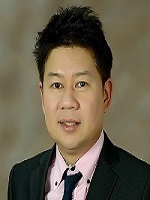
Associate Professor Dr. Anak Khantachawana
Department of Mechanical Engineering and Biological Engineering Program
King Mongkut’s University of Technology Thonburi
Title
Department of Mechanical Engineering and Biological Engineering Program
King Mongkut’s University of Technology Thonburi
Abstract
Advances in surgical techniques lead to minimally invasive procedures which typically generate less post-surgical pain, less risk, and quicker recoveries. Stenting is one of minimally invasive procedures which has been widely utilized in many parts of the body. In this conference, research of NiTi shape memory alloys will be introduced since it is needed for self-expandable stents. Some of the innovative self-expandable devices and their development pathway which we have developed with dentists, cardiologists, neurosurgeons, etc will be discussed and shared. Moreover, business opportunity in Thailand will be talked via aspects of patient numbers, market values and startups.
Biography
Dr. Anak Khantachawana is an Associate Professor of mechanical engineering and biological engineering at King Mongkut’s University of Technology Thonburi (KMUTT). He also commenced his role as an Assistant to the President for Internationalization since July 2010. He is now head of “Smart Materials Research Laboratory (SmartLab)” and also a chairman of “Smart Healthcare” strategic research group at KMUTT. Dr Anak’s research strengths are in biomaterials and smart materials. He has many research networks with Thai medical schools. He is also having 4 startup companies to transfer medical technology development from SmartLab. His research team received more than 40 research and innovation awards continuously, i.e. TRIUP award 2022 for high impact deep technology, National Innovation Award 2022, and others.
Asst.Prof.Dr. Pasarat Khongkow
- Details
- Category: Uncategorised
- Published on Tuesday, 25 October 2022 17:31
- Written by Super User
- Hits: 1777
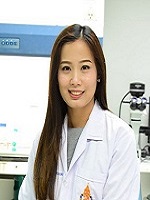
Asst. Prof. Dr. Pasarat Khongkow
Director of Translational Medicine Research Center, Faculty of Medicine, Prince of Songkla University
Senior Lecturer at Department of Biomedical Sciences and Biomedical Engineering, Faculty of Medicine, Prince of Songkla University
King Mongkut’s University of Technology Thonburi
Abstract
Precision Medicine is an advanced approach to select the right treatments to the right patients at the right time by screening for molecular tumour alterations that predict treatment response, ideally leading to optimal treatments for cancer patients. Recently, functional assays by integrating patient-derived organoid (PDO) and microfluidic technology has been represented as an alternative and innovative tool to directly evaluate and predict treatment efficacy from the patient’s cells. In this work, we highlight our optimal and cost-effective methods for generating prostate and breast cancer organoids within 4 weeks, as well as a new approach todesign and fabricate an optimized cancer-on-a-chip platform, as novel tools for predicting patients’ responses and enabling physicians to select treatments that potentially improve treatment outcomes of cancer patients.
Biography
Asst.Prof. Dr. Pasarat completed her Ph.D. in Molecular Oncology from Imperial College London, UK in 2015. She has joined Department of Biomedical Science and Biomedical Engineering, the Faculty of Medicine, Prince of Songkla University since 2016. Now, she is a director of Translational Medicine Research Center, Faculty of Medicine. Her current research is focused on Cancer Precision Medicine by elucidating of cellular signalling mechanisms associated with tumorigenesis, DNA damage response, metastasis and chemotherapy resistance in breast cancer, as well as the identification of novel cancer biomarkers and effective targeted cancer therapies using advance cellular and molecular bioengineering technologies. She is also interested in developing innovative research tools for cancer precision medicine research and drug discovery. More physiological 3D cell culture systems, cancer organoid culture, cell-on-chip technology, live cell imaging, and advanced genetic engineering are key study points. In addition to cancer research, she also develops the innovative cell-based systems for skincare efficacy testing and anti-Alzheimer’s
Prof. Lim Chwee Teck
- Details
- Category: Uncategorised
- Published on Tuesday, 25 October 2022 15:44
- Written by Super User
- Hits: 3922
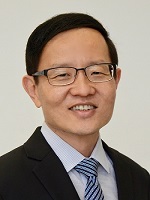
Prof. Lim Chwee Teck
Department of Biomedical Engineering, Institute for Health Innovation & Technology (iHealthtech),
National University of Singapore
Title
Advancing Healthcare through Smart Wearable Technologies
Abstract
Current health monitoring and diagnosis are done either ad hoc with motivation arising from a medical situation, or periodic arising from a health screening exercise. As such, we typically get a snapshot of our own health condition at a point in time. There is thus a need to resolve these problems and improve the accuracy, specificity, speed, and frequency of health monitoring and diagnosis. The emergence of new medical technologies such as smart wearables as well as health data analytics and AI are driving the future of healthcare. In this talk, I will cover several innovative health technologies that we have developed through an interdisciplinary collaboration among engineers, scientists, clinicians, industrial partners and entrepreneurs here in in Singapore. As we enter into the era of precision medicine, our smart health technologies and AI will contribute towards the future of health diagnostics and monitoring, that will not only be about early diagnosis and precise therapy, but also prevention.
Biography
Professor LIM Chwee Teck is the NUSS Chair Professor of Biomedical Engineering and Director of the Institute for Health Innovation and Technology at the National University of Singapore. He is also the Director of the Singapore Health Technologies Consortium. His research interests are in human disease mechanobiology as well as development of innovative microfluidic wearable technologies. He has co-authored over 450 journal publications including in Nature and Science related journals and given more than 430 plenary/keynote/invited lectures. He is also a serial entrepreneur having started six companies to commercialize technologies developed in his lab. Prof Lim is an elected fellow of IUPESM, US National Academy of Inventors, AIMBE, IAMBE, ASEAN Academy of Engineering and Technology, Academy of Engineering, Singapore and Singapore National Academy of Science. He and his team have garnered over 100 research awards and honors including Highly Cited Researcher, ASEAN Outstanding Engineering Achievement Award, Asian Scientists 100, Wall Street Journal Asian Innovation Award (Gold) and the President's Technology Award among others.