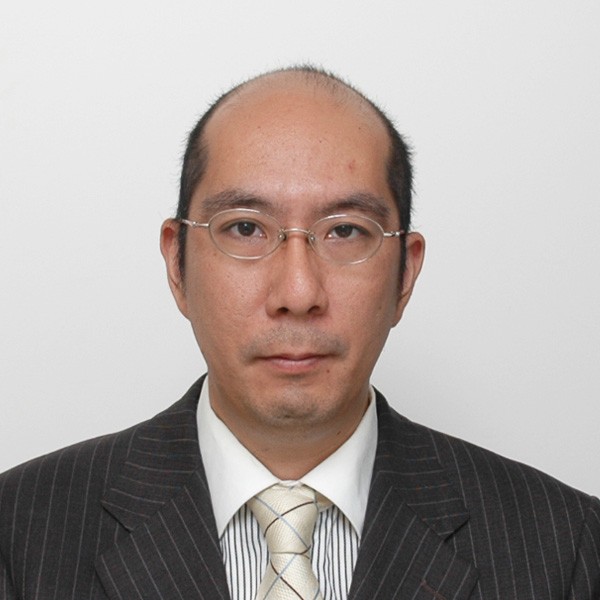
Assoc. Prof. Dr. Arao Funase
Graduate school of Engineering, Nagoya Institute of Technology, JAPAN
-
Title: EEG signals related to playing maze: Example for spindle wave and Fmq
Arao Funase
Graduate school of Engineering, Nagoya Institute of Technology, JAPAN
Sei-etsu Fujiwara
St. Marianna University, School of Medicine, JAPAN
Abstract
Our final goal is to analyze EEG signals related to higher brain function. Especially, we focus on higher brain function related to playing maze. In this presentation, we show EEG signals related to memoryconsolidationin playing the maze and related to definition of difficulty for spatial exploration in the maze.
To analyze memory consolidation, we record EEG signals called the spindle wave. Spindle wave in memory-fixation is generated in synchronization with hippocampal ripples that contribute to memory consolidation. Therefore, spindle also relate to function of memory consolidation. We focus on the spindle wave that occurs during sleep and try to clarify the mechanism of memory consolidation by EEG. We conduct an experiment. Subjects play maze tasks before and after sleep, and we compare the result of maze task and the spindle wave measured during sleep. As results, we confirmed the relationship of memory consolidation and spindle wave.
To analyze definition of difficulty for spatial exploration, we record EEG signals called the Fmq. we already have shown subjects change the exploration strategies that respond to different maze parameters. Nevertheless, the relationship between the maze parameter and the internal state of the subject remains unknown, we introduced EEGs as an index of the human’s internal state. In this study, we focus on the Fmq of EEG when the subjects enter junctions during maze tasks. We used multiple maze configurations that displayed as a first-person view. As a result, during just after entry to the junction, Fmq power was significantly higher for incorrect directions than for correct directions. In addition, we analyzed residence time during junction as an index of the ambivalence and discriminated into short or long residence time. From our results, the increasing Fmq power is related to the subject’s decision for the direction of the junction and/or destination.
Autobiography
Arao Funase is an associate professor in Nagoya Institute of Technology, JAPAN. He received the B. Sc., M. Sc., Ph. D. degree in Engineering from Nagoya University, JAPAN. From 2004 until 2015, he was an assistant professor at Nagoya Institute of Technology. He is also a visiting researcher at RIKEN (JAPAN) from 2001 until 2018 and National Center for Geriatrics and Gerontology (JAPAN) from 2017 until 2019. His research field is the Neuroscience, the Neuroengineering and the biosignal processing. Especially, he focuses on relationship between EEG signals and brain function. And he has been developing the brain computer interface and system for displaying the internal state of a human.