
There are two steps to complete registration.
Step 1: Make payment
Important note: student registration rate is applied only when authors submitted more than more than one paper. If only one paper is submitted, it must be registered as regular rate.
For Thai resident, please transfer registration fee to account
Thai Association of Biomedical Engineering
KrungSri Bank
Grand canal Branch
Account number: 484-1-15210-8
After payment, prepare to attach payment slip in registration form step 2.
For non-thai resident, please select your registration to make payment
Member late regular onsite (585 USD)
Member late regular online (450 USD)
Member late student onsite (315 USD)
Member late student online (210 USD)
Non-member late regular onsite (630 USD)
Non-member late regular online (510 USD)
Non-member late student onsite (340 USD)
Non-member late student online (240 USD)
RNE (95 USD) sold out
After payment , check your email for receipt, capture screen of the receipt
and prepare to attach in registration form step 2.
Step 2: Fill in registration form
keynote2


- Details
- Category: Uncategorised
- Published on Tuesday, 18 August 2026 10:36
- Written by Super User
- Hits: 92
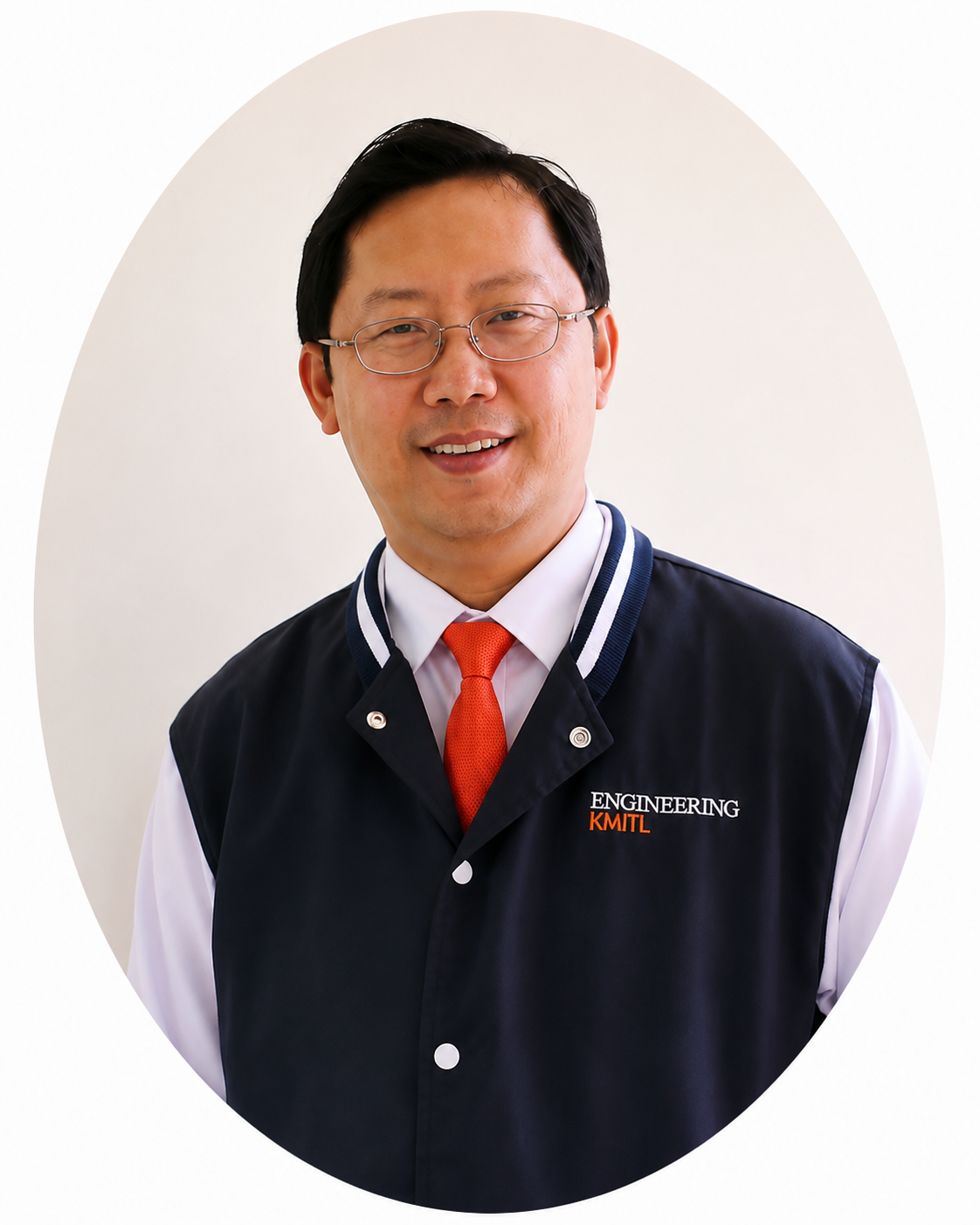 |
Prof. Somyot Kaitwanidvilai Dean of School of Engineering, King Mongkut’s Intstiture of Technology Ladkrabang |
| Distinguished Professor Kuo-Yung Hung Dean, College of Engineering Director, Research Center for Intelligent Medical Devices (RCIMD) Distinguished Professor, Department of Mechanical Engineering Ming Chi University of Technology, Taiwan | |
| Prof. Yoshihiro Tange, Ph.D. Department of Advanced Medical Sciences, Faculty of Medicine, Oita University, Japan | |
| Prf. Nobuhiko Kojima, Laboratory of Regenerative Biology, Department of Life and Environmental System Science, Graduate School of Nanobioscience, Yokohama City University, Japan | |
| Prof. Manuel Luque Casanave, Faculty of Mechanical Engineering, Universidad Nacional de Ingenieria, Lima, Peru |
Keynote
Manuel Luque Casanave, Research-professor,
Faculty of Mechanical Engineering,
Universidad Nacional de Ingenieria, Lima, Peru

New approaches in biomedical engineering applied to improve the human living conditions on the Moon and on Mars
Abstract
Human long-term habitation on extraterrestrial environments such as Mars and the Moon requires the development of disruptive biomedical engineering technologies, capable of compensating for atmospheric incompatibility and reduced-gravity physiological alterations. This work presents an integrated biomedical-technological proposal focused on two critical challenges for future planetary colonization: autonomous individual respiration support on Mars and adaptive hemodynamic regulation of the lower extremities under hypogravity conditions. The first proposal introduces an innovative photonic respiration-assist system designed to generate breathable oxygen directly from the carbon dioxide-rich Martian atmosphere. The concept is based on the application of high-energy ultraviolet photonic dissociation using specialized laser emitters operating near the 160-167 nm wavelength range. These ultraviolet photons possess sufficient quantum energy to induce molecular bond cleavage in CO₂, enabling photodissociation into oxygen-containing species without dependence on conventional catalytic reactors or high-mass electrolysis systems. The proposed mechanism leverages solar photon energy amplification and ultraviolet photochemistry to reduce energy consumption and system complexity compared with traditional oxygen extraction technologies. This approach may provide a lightweight, scalable, and wearable oxygen-generation platform suitable for extravehicular activities and distributed habitat life-support systems
The second proposal addresses cardiovascular deconditioning and impaired peripheral circulation caused by prolonged exposure to reduced gravity on Mars. A biomedical nanofluidic circulation-enhancement system is proposed to maintain physiological perfusion in the lower limbs equivalent to terrestrial hemodynamic conditions. The system integrates implantable or wearable nanopumps with a closed-loop proportional– integral–derivative (PID) control architecture. Real-time arterial Doppler flow sensors continuously monitor blood velocity and volumetric flow in the lower extremities. These measurements are processed by a nanocontroller that compares the detected hemodynamic parameters against predefined Earth-equivalent perfusion setpoints. Wireless adaptive control signals are then transmitted to the nanopump network to dynamically accelerate or decelerate microcirculatory assistance, thereby stabilizing peripheral perfusion and minimizing venous stasis, muscle atrophy, and orthostatic intolerance. The proposed framework combines photonic engineering, nanobiomedical systems, physiological control theory, and extraterrestrial medicine into a unified strategy for sustaining human health beyond Earth. These concepts may contribute to the next generation of biomedical support technologies for future lunar and Martian missions, offering potential pathways toward autonomous life-support, improved astronaut mobility, and enhanced long-duration planetary survival.
Curriculum Vitae
Manuel Luque Casanave Graduated as a Mechanical-Electrical Engineer from the Universidad Nacional de Ingeniería (UNI). Experienced in the formulation and implementation of biomedical projects in Peru, Brazil, Colombia, Guatemala, Switzerland, Italy, Sweden, England. Graduated as a Systems Analyst from the Pontificia Universidad Católica de Peru Awarded a British Council scholarship for postgraduate studies in control systems at the University of Surrey (UK, 1985–1986); received a USAID/IEE scholarship for an international diploma in energy at TVA/University of Tennessee at Chattanooga (USA, 1988). Awarded a Fulbright Commission scholarship for environmental research, serving as a researcher and visiting professor at the University of Pittsburgh (USA, 1992); received a Swedish government scholarship for technologies regarding environmental protection and prevention in industrial processes under the SIDA/Norköping University agreement (Sweden, 1997).
Professor and researcher at the Universidad Nacional de Ingeniería (UNI). Focuses on designs incorporating innovation and emerging, disruptive technologies. Proposed innovative technologies to NASA aimed at ensuring human survival on the Moon and Mars. Served as the UNI project lead for the NASA HERC design competitions in Huntsville, Alabama (USA) in 2019, 2020, and 2023, securing first place for UNI while competing against over 120 universities worldwide.
Developed an innovative procedure applying Boolean models to address discrete control automation problems known as the Jeans-Luque Method. This innovation was developed in the UK in 1986 in collaboration with Professor Jeans during a scholarship awarded by the British government. It holds two invention patents and one utility design as well as three intellectual property rights.
Presentations featuring innovative engineering proposals at over 150 national and international conferences. Authorship of more than 600 technical articles, papers, essays, and technological proposals published by institutions such as the Universidad Nacional de Ingeniería (Peru), Universidad Federico Santa María (Chile), the University of Pittsburgh (USA), the University of Texas (USA), the University of Comahue (Argentina), the University of the Andes (Venezuela), and the Universidad San Carlos de Borromeo (Guatemala). In newspapers including *El Comercio* (Peru), *La República* (Peru), *El Mercurio* (Chile), the *Surrey Mirror* (UK), and *Södermanlands Nyheter* (Sweden); and in magazines such as *World Leather* (UK), *Stakeholders* (Peru), *Energía y Mecánica* (Peru), *FONAM* (Peru), and *Visión*, as well as publications by the College of Engineers of Peru, the College of Engineers of Guatemala, the National University of Engineering (Peru), and the Society of Engineers of Peru.
“Hypothesis regarding the “Effects of Electromagnetic Fields on Human Beings” in the international journal *Consumidores y Desarrollo* (Consumers and Development), Year XIX/No. 1/January–April 2004, Chile; ISSN 0717-2680. Publication of the hypothesis regarding the interaction between mobile phones and tumors in the international journal *Consumidores y Desarrollo*, Year XIX/No. 3/September–December 2004, Chile; ISSN 0717-2680. https://www.academia.edu/80216344/Radiaciones_electromagn%C3%A9ticas_y_l a_salud
“Optimized Design of a Spinal Prosthesis using Finite Element Structural Analysis” in the journal *Ciencia e Ingeniería* (Science and Engineering), Faculty of Engineering – Universidad de los Andes (ULA), Mérida, Venezuela, Vol. 23, March 2002, No. 1; ISSN 1316-7081. https://alicia.concytec.gob.pe/vufind/Record/UUNI_7f115df5455891483ed4035074 abdcef/Details http://erevistas.saber.ula.ve/index.php/index/search/authors/view?firstName=M.&middleName=H.&lastName=Luque&affiliation=Universidad%20Nacional%20de%20I ngenier%C3%ADa&country=PE
Proposal to the international scientific community of the “Thermomagnetic Hypothesis” regarding the interpretation of the origin of the energy potentially used by Unidentified Flying Objects (UFOs). Argentina / USA 2013 Facebook_: https://www.facebook.com/209412885905003/posts/ufo-variable hypotheses-thermomagneticmanuel-luque-casanave-the-first-scientist /209422015904090/
Youtube: https://www.youtube.com/watch?v=kzMHROJhA7g “Development of an electric wheelchair prototype able to climb steps and controlled by inertial sensors" presented at the 2019 12th Biomedical Engineering International Conference (BMEiCON) by Manuel Luque Casanave and co-authors from the Universidad Nacional de Ingeniería (UNI). https://www.researchgate.net/publication/339255772_Development_of_an_electric_wheelchair_prototype_able_to_climb_steps_and_controlled_by_inertial_sensors
Email: This email address is being protected from spambots. You need JavaScript enabled to view it.
Nobuhiko Kojima, Ph.D.
Professor, Laboratory of Regenerative Biology,
Department of Life and Environmental System Science,
Graduate School of Nanobioscience, Yokohama City University, Japan

Does Engineering an Organ Mean Reproducing the Real Organ?
Abstract
I have pursued the engineering of organs for nearly three decades. In tissue engineering, considerable effort has been devoted to reproducing the structures and functions of biological organs. This raises a fundamental question: does engineering an organ necessarily require faithfully reproducing its natural counterpart? Depending on the purpose, it may be more appropriate to redesign tissue architecture and composition according to the functions to be achieved.
My research has focused on three-dimensional tissue engineering based on cell aggregates, initially with the aim of reproducing tissue architecture and the microenvironment as faithfully as possible (Reproduce). I have developed heterogeneous spheroids composed of hepatocytes and vascular endothelial cells, hepatocyte spheroids incorporating hydrogel beads to enhance mass transport, and spheroids incorporating extracellular matrix (ECM) to reproduce cell–ECM interactions and cellular polarity.
As my research progressed, I began to modify these components according to specific purposes. Hydrogel beads were incorporated to create tissue architectures suitable for xenogeneic islet transplantation, while changes in ECM composition were used to develop islet disease models. I have also explored hydrogel-bead incorporation to improve spheroid transparency for image-based analysis. These studies represent different forms of tissue redesign, in which tissue architecture and composition are intentionally modified to achieve specific functions or purposes (Redesign).
This perspective has also led to the development of a “liquid liver,” in which liver-associated functions are reconstructed using cells, biomaterials, and functional components without reproducing the anatomical structure of the liver itself. Rather than asking “How should we build a liver?”, the focus shifts to “How can we achieve the functions that are needed?”
In this talk, I will introduce the ideas and fabrication approaches that have shaped my work on spheroid design, together with examples of tissue redesign. I hope this perspective will provide young researchers in cell-based engineering with both practical insights and a different way of thinking about how to design their research.
Curriculum Vitae
Dr. Nobuhiko Kojima is a Professor at Yokohama City University. His research focuses on three-dimensional cell culture, tissue engineering, regenerative medicine, and microphysiological systems (MPS), with particular emphasis on the design and control of cellular microenvironments.
Education
1996 Bachelor of Engineering, Osaka University
1998 Master of Engineering, Osaka University
2001 Ph.D. in Biochemistry, The University of Tokyo
Professional Experience
2001–2003 Research Scientist, Kanagawa Academy of Science and Technology
2003–2006 Research Associate, The University of Tokyo
2007–2009 Senior Researcher, UCLA and VAGLA Healthcare System
2009–2013 Project Assistant Professor, The University of Tokyo
2013–2024 Associate Professor, Yokohama City University
2022–2025 Chief Technology Officer (CTO), Ecocell Inc.
2024–present Professor, Yokohama City University
2024–present Director, Career Support Center, Yokohama City University
2024–present Assistant to the President, Yokohama City University
Research Interests
Three-dimensional cell culture and tissue engineering
Spheroids and organoids
Microphysiological systems (MPS)
Regenerative medicine
Physical microenvironment and cellular engineering
There are two steps to complete registration.
Step 1: Make payment
Important note: student registration rate is applied only when authors submitted more than more than one paper. If only one paper is submitted, it must be registered as regular rate.
For Thai resident, please transfer registration fee to account
Thai Association of Biomedical Engineering
KrungSri Bank
Grand canal Branch
Account number: 484-1-15210-8
After payment, prepare to attach payment slip in registration form step 2.
For non-thai resident, please select your registration to make payment
Member early-bird regular onsite (540 USD)
Member early-bird regular online (400 USD)
Member early-bird student onsite (300 USD)
Member early-bird student online (180 USD)
Non-member early-bird regular onsite (585 USD)
Non-member early-bird regular online (450 USD)
Non-member early-bird student onsite (315 USD)
Non-member early-bird student online (210 USD)
After payment , check your email for receipt, capture screen of the receipt
and prepare to attach in registration form step 2.
Step 2: Fill in registration form