
Distinguished Professor Kuo-Yung Hung
Dean, College of Engineering
Director, Research Center for Intelligent Medical Devices (RCIMD)
Distinguished Professor, Department of Mechanical Engineering
Ming Chi University of Technology, Taiwan

From Laboratory Innovation to Commercialized Biomedical Technologies:
A Journey Across Medical Devices, Biomaterials, Medical Robotic, and Sustainable Healthcare Products
Abstract
Translating academic research into real-world products is one of the most challenging yet impactful missions in biomedical engineering. This keynote speech will present a series of successful technology commercialization experiences spanning biomaterials, medical devices, and sustainable healthcare products. The presentation will highlight how interdisciplinary engineering research can evolve from laboratory-scale innovation into clinically applicable and commercially viable products through collaboration among universities, hospitals, research institutes, and industrial partners.
The first part of the keynote introduces the development of surface-modified dental implants and artificial dental root technologies developed in collaboration with Chang Gung Memorial Hospital and Chang Gung Medical Technology in Taiwan. The project successfully achieved Taiwan TFDA approval and U.S. FDA 510(k) clearance, demonstrating the importance of integrating materials science, biomedical engineering, and industrial manufacturing capabilities.
The second part focuses on biodegradable biomedical membranes, including anti-adhesion membranes and periodontal regeneration membranes developed together with Nanya Plastics Corporation. These technologies combine electrospinning, biodegradable polymers, and tissue engineering concepts to improve wound healing, reduce post-surgical adhesion, and promote bone regeneration. I will discuss the pathway from material formulation and animal testing to pilot-scale manufacturing and regulatory preparation.
The keynote will also present the development of a portable intelligent chest drainage system designed for clinical respiratory care applications. The device integrates sensing, pressure monitoring, and intelligent control technologies to provide a compact and user-friendly solution for thoracic drainage management. The project demonstrates how engineering integration and industry collaboration can accelerate medical device prototyping and product realization.
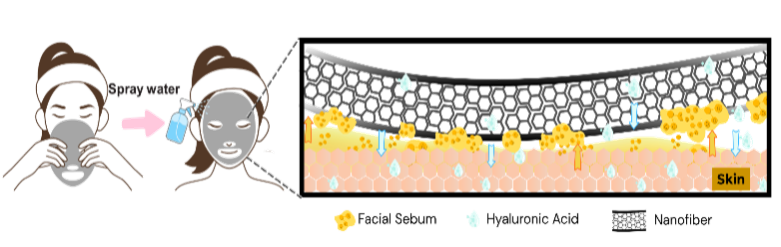
In addition, environmentally sustainable healthcare materials will be introduced through the development of highly oil-absorbent biodegradable facial masks fabricated using eco-friendly nanofiber technologies. The research integrates bamboo-derived carbon nanoparticles and biodegradable polymeric materials to achieve enhanced skincare functionality while reducing environmental impact.
Finally, the presentation will discuss critical factors influencing successful technology transfer and commercialization, including interdisciplinary collaboration, intellectual property strategy, clinical validation, regulatory approval, manufacturing scalability, and industry-academia partnership models. I hope this keynote can provide valuable insights for researchers and young engineers seeking to bridge the gap between academic innovation and industrial application in the biomedical engineering field.
|
|
|
|
Dental implant |
Biodegradable biomedical membranes, including anti-adhesion membranes and periodontal regeneration membranes |
|
|
|
|
Portable intelligent chest drainage system designed for clinical respiratory care applications |
|
|
|
|
|
Steam thermal vest [Formosa Biomedical Technology Corp.] |
Oil-absorbent biodegradable facial mask |



Curriculum Vitae
Professor Kuo-Yung Hung is Dean of the College of Engineering, Director of the Research Center for Intelligent Medical Devices (RCIMD), and Distinguished Professor in the Department of Mechanical Engineering at Ming Chi University of Technology (MCUT), Taiwan. He received his Ph.D. in Engineering and Systems Science from National Tsing Hua University in 2004 and previously served as a senior engineer at AU Optronics.
Over the past two decades, Professor Hung has established an interdisciplinary research platform bridging engineering innovation, biomedical technology, intelligent automation, and industrial implementation. His current research is strategically focused on three major areas: advanced implantable medical devices, critical component technologies for semiconductor equipment, and intelligent medical robotic systems.
1. Advanced Implantable Medical Devices
Professor Hung has extensive experience in the development, validation, and commercialization of implantable and regenerative medical technologies. His research on titanium surface modification and hydroxyapatite coating for artificial dental implants contributed to commercial products that obtained Taiwan medical device approval and U.S. FDA 510(k) clearance. His team has also developed a biodegradable periodontal regeneration membrane, recognized by the 21st National Innovation Award, as well as a biodegradable anti-adhesion membrane that obtained TFDA approval in 2025 and was successfully commercialized in 2026.
His research emphasizes the complete translational pathway from biomaterial design, surface engineering, biological validation, and animal testing to regulatory approval, technology transfer, and industrial production, establishing a strong platform for next-generation implantable and regenerative medical devices.
2. Critical Component Technologies for Semiconductor Equipment
Professor Hung also leads industry-oriented research on critical materials, component reliability, failure analysis, and advanced manufacturing technologies for semiconductor equipment. Through long-term collaboration with industrial partners, his team has developed analytical and verification methods for key equipment materials and components, helping manufacturers solve critical reliability and production issues in advanced semiconductor processing systems.
His work on enabling component technologies for advanced semiconductor packaging equipment received the 2026 TSIA Semiconductor Equipment Innovation Award, recognizing its successful industrial implementation and commercialization. The 2026 TSIA Semiconductor Equipment Innovation Award is selected by distinguished industry experts and scholars representing Taiwan’s semiconductor sector. With only three winning teams selected in 2026, the award is highly competitive and demands strong technological innovation and practical industrial impact. Professor Kuo-Yung Hung’s team developed a high-performance solution for a critical component in CoWos advanced packaging bonding processes, significantly improving equipment stability. The achievement directly addresses a key technological bottleneck in advanced semiconductor packaging equipment and demonstrates substantial value in technological innovation, industrial implementation, and strengthening the autonomy and resilience of the semiconductor equipment supply chain. This research direction strengthens the linkage between university research and Taiwan’s advanced semiconductor equipment supply chain, particularly in technologies supporting next-generation packaging and high-precision manufacturing.
3. Intelligent Medical Robotic Systems
A third major research focus is the development of intelligent medical and elderly-care robotic systems based on autonomous mobile robot (AMR) platforms. Professor Hung’s team has established proprietary AMR technologies integrating autonomous navigation, multimodal sensing, intelligent control, human–machine interaction, and modular application interfaces.
These platforms are being developed for hospitals, long-term care institutions, elderly-care environments, and industrial applications, including medication and material delivery, environmental monitoring, patrol assistance, and interactive healthcare services. His current research further integrates AI, multimodal perception, voice interaction, and human-centered service functions to develop next-generation autonomous healthcare robots for aging societies.
Academic and Industrial Impact
During the past three years, Professor Hung has secured more than $2 million in industry–academia collaborative research funding and generated more than $0.4 million in technology transfer revenue. He holds more than 30 invention patents in Taiwan, the United States, and China.
His selected honors include the 2026 TSIA Semiconductor Equipment Innovation Award, the 19th and 21st National Innovation Awards, the Outstanding Young Engineering Professor Award from the Chinese Society of Mechanical Engineers, and the HIWIN Mechanical Thesis Awards in 2011 and 2015.
As Dean of the College of Engineering and Director of RCIMD, Professor Hung continues to integrate academic research, clinical needs, and industrial resources. His long-term vision is to establish internationally competitive technology platforms in advanced implantable medical devices, semiconductor equipment technologies, and intelligent medical robotics, transforming university research into high-impact technologies with measurable clinical, industrial, and societal value.